How Is Liability Determined in a Truck Accident? | Complete Investigation Process
Legal Process Explained: How Is Liability Determined in a Truck Accident Claims
How is liability determined in a truck accident? The process involves systematic investigation of physical evidence, regulatory compliance, driver conduct, company policies, and vehicle maintenance records. Multiple parties examine crash data, federal trucking regulations, and witness testimony to establish which individuals or entities may bear legal responsibility for the collision.
Unlike standard vehicle accidents, determining liability in commercial trucking crashes requires analyzing complex federal regulations, corporate structures, and industry standards. The investigation extends beyond the immediate crash scene to examine trucking company operations, driver qualification files, maintenance facilities, and cargo loading procedures. Law enforcement, insurance adjusters, accident reconstructionists, and attorneys each play distinct roles in this comprehensive evaluation process.
This guide walks through the complete liability determination process for 18-wheeler, semi-truck, and tractor-trailer accidents. You’ll understand what evidence investigators collect, how FMCSA regulations influence liability findings, which experts analyze crash data, and how courts evaluate competing claims about responsibility. Whether you’re navigating the initial insurance investigation or preparing for potential litigation, understanding this process helps you recognize when thorough investigation may reveal responsible parties beyond the obvious ones.
Truck Accident Data: Primary Evidence Sources for Establishing Commercial Vehicle Liability
Electronic Logging Device Data
Commercial trucks contain electronic logging devices that record hours of service, driving time, rest periods, and duty status changes. This data reveals whether drivers complied with FMCSA regulations limiting consecutive driving hours and mandatory rest breaks. ELD records often contradict driver or company statements about compliance, providing objective evidence of regulatory violations that may establish liability.
Event Data Recorder Information
Similar to airplane black boxes, event data recorders in commercial trucks capture critical information about vehicle operation immediately before crashes. These devices record speed, braking, throttle position, engine RPM, seatbelt use, and other parameters. EDR data provides objective evidence about driver actions during the crucial seconds before impact.
Maintenance and Inspection Records
Federal regulations require detailed maintenance logs, pre-trip inspection reports, and repair documentation for all commercial vehicles. Gaps in maintenance records, deferred repairs, or patterns of mechanical issues may provide evidence of negligence when those failures contribute to accidents. Investigators examine these records to determine if vehicle defects resulted from inadequate maintenance rather than unavoidable mechanical failure.
Driver Qualification Files
FMCSA regulations mandate comprehensive driver qualification files containing licenses, medical certificates, road tests, training records, employment history, and motor vehicle record checks. Inadequate or falsified qualification files may demonstrate negligent hiring when unqualified drivers cause accidents. Missing background checks, expired medical certifications, or overlooked prior safety violations can establish company liability.
Step-by-Step Investigation: The Multi-Phase Liability Determination Process
Phase One: Immediate Scene Investigation
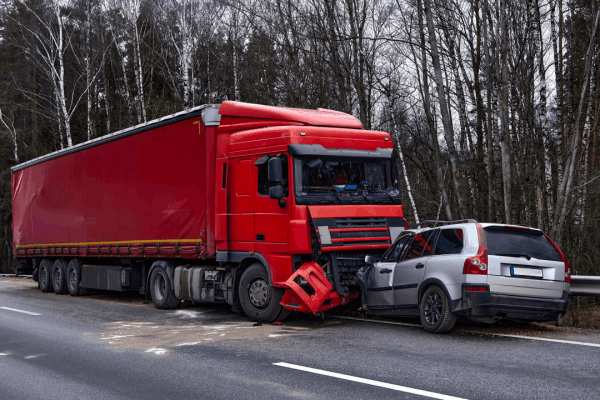
Law enforcement conducts initial investigations at crash scenes, documenting vehicle positions, road conditions, traffic control devices, skid marks, debris fields, and environmental factors. Officers interview drivers, passengers, and witnesses while memories remain fresh. This immediate investigation establishes the basic facts of the collision.
Phase Two: Regulatory Compliance Review
Investigators examine whether all parties complied with applicable federal motor carrier safety regulations. This review covers driver qualifications, hours of service, vehicle maintenance, cargo securement, drug and alcohol testing, and company safety management systems. Each regulatory area involves specific documentation requirements.
Phase Three: Technical Analysis
Accident reconstruction experts analyze physical evidence, vehicle damage, road conditions, and data recorder information to determine vehicle speeds, impact forces, sight distances, and driver reaction opportunities. This technical analysis often contradicts initial assessments based on witness statements or driver accounts.
Phase Four: Corporate Investigation
Investigators examine trucking company operations, safety policies, training programs, hiring practices, and management oversight. This corporate investigation determines whether companies created environments that encouraged or enabled unsafe practices. Internal communications, dispatch records, and bonus structures may reveal pressure on drivers to violate regulations.
Phase Five: Comparative Analysis
When multiple parties potentially share liability, investigators conduct comparative analysis of each party’s contribution to the collision. This analysis considers the relative severity of violations, the causal connection between each party’s actions and the crash, and the foreseeability of harm from specific violations or negligent acts.
Key FMCSA Concepts: Federal Standards That Guide Liability Determinations
Negligence Per Se Through Regulatory Violation
When parties violate FMCSA regulations and those violations contribute to accidents, courts may apply negligence per se doctrine. This legal principle treats regulatory violations as automatic proof of negligence without requiring additional evidence that the conduct fell below reasonable care standards. Violations of hours-of-service rules, maintenance requirements, or driver qualification standards can establish negligence per se.
Employer Liability Under Federal Standards
Federal motor carrier regulations impose specific duties on trucking companies regarding driver supervision, vehicle maintenance, and safety management. These duties create direct liability pathways independent of driver actions. Companies cannot delegate away their regulatory responsibilities to independent contractors or third parties.
FMCSA safety fitness determinations consider company-wide compliance patterns. When investigators find systematic violations across multiple drivers or vehicles, this evidence may suggest inadequate safety management creating company liability for individual accidents.
Causation Standards in Complex Cases
Determining how is liability determined in a truck accident requires establishing causation—the connection between violations or negligence and the collision. Federal courts apply varying causation standards, with some requiring “but for” causation while others accept contribution as sufficient connection.
In commercial vehicle cases, multiple violations or negligent acts often combine to cause crashes. A driver’s hours-of-service violation creates fatigue, inadequate training prevents proper emergency response, and deferred brake maintenance extends stopping distance. Each factor may contribute, making liability determination more complex than simple cause-and-effect analysis.
Expert Compensation Strategies: Professional Analysis Required for Liability Determination
Accident Reconstruction Specialists
These experts use physics, engineering principles, and crash dynamics to determine vehicle speeds, impact forces, pre-crash movements, and driver reaction opportunities. Reconstruction analysis often reveals events that witnesses didn’t observe or misunderstood. Computer simulations demonstrate how crashes occurred and whether different actions could have prevented collisions.
Trucking Industry Standards Experts
Industry experts testify about accepted practices in commercial trucking operations, driver training, vehicle maintenance, and cargo handling. These witnesses explain how reasonable trucking companies operate and whether defendants’ practices met industry standards. Their testimony helps courts understand technical aspects of commercial vehicle operations.
Federal Regulation Compliance Specialists
FMCSA regulations fill hundreds of pages with complex requirements covering every aspect of commercial trucking operations. Compliance experts interpret these regulations and evaluate whether companies and drivers met federal standards. They explain how specific violations relate to crash causation and why certain regulatory requirements exist.
Medical and Human Factors Experts
In cases involving driver impairment, fatigue, or medical conditions, healthcare professionals and human factors experts evaluate driver fitness and capability. They explain how fatigue affects perception, reaction time, and decision-making. Medical experts review driver qualification files to determine if medical conditions should have disqualified drivers or required restrictions.
Common Truck Challenges: Obstacles in Commercial Vehicle Liability Investigations
Evidence Spoliation and Destruction
Trucking companies sometimes destroy or alter evidence before investigators can examine it. Electronic data gets overwritten, maintenance records disappear, internal communications vanish, and witnesses become unavailable. This evidence spoliation can occur through negligence or intentional concealment.
Complex Corporate Structures
Modern trucking operations often involve multiple corporate entities designed to limit liability exposure. Shell companies, lease arrangements, independent contractor relationships, and subsidiary structures obscure true operational control and financial responsibility. Investigators must work to identify all potentially liable entities.
Conflicting Expert Opinions
Defense experts often provide opinions contradicting plaintiff experts’ conclusions about crash causation, regulatory violations, or industry standards. Resolving these conflicts requires detailed analysis of expert qualifications, methodologies, and underlying data. Courts evaluate expert reliability under legal standards excluding unreliable or speculative opinions.
Multi-State Jurisdictional Issues
Commercial trucks operate across state lines, creating questions about which state’s laws apply to liability determinations. Different states have varying standards for negligence, comparative fault, joint and several liability, and damages calculation. Choice of law analysis determines which state’s substantive rules govern liability questions.
Legal Solutions: Evidence Preservation in Truck Accident Cases
Immediate Scene Documentation
Photograph vehicle damage, road conditions, traffic controls, skid marks, debris, and injuries from multiple angles. Video record the scene, including views showing sight distances and approaches to the collision point. Obtain contact information from all witnesses, including passengers in other vehicles, pedestrians, and nearby residents or business employees who may have observed events.
Medical Treatment Documentation
Seek immediate medical evaluation even for apparently minor injuries. Medical records created promptly after accidents establish the causal connection between crashes and injuries. Delayed treatment allows insurance companies to argue that injuries resulted from other causes or weren’t serious.
Preservation Demand Letters
Send formal letters to trucking companies, maintenance providers, cargo companies, and other potentially responsible parties immediately after crashes. These letters create legal obligations to preserve electronic data, maintenance records, training files, internal communications, and other evidence. Failure to preserve evidence after receiving demands may result in sanctions.
Preservation letters should specifically identify categories of evidence relevant to the crash, including ELD data, EDR information, dash camera recordings, dispatch communications, driver qualification files, vehicle maintenance logs, and safety management records.
Federal Regulation Insights: DOT Compliance Review Methods
Compliance Safety Accountability System
The CSA system monitors motor carrier and driver safety performance through inspection results, crash reports, and investigation findings. The system assigns scores in seven behavioral analysis and safety improvement categories. Poor CSA scores may indicate systematic safety problems creating liability evidence in individual crash cases.
Safety Fitness Determinations
FMCSA assigns safety fitness ratings to motor carriers based on compliance investigations. Ratings of “unsatisfactory” or “conditional” indicate serious compliance problems. Operating with poor safety ratings despite knowledge of deficiencies may establish conscious disregard for safety that can support liability claims.
Understanding Liability Assessment: Key Points for Commercial Vehicle Responsibility
How is liability determined in a truck accident through the complete investigation and legal analysis process? Multiple investigation phases, expert analyses, regulatory compliance reviews, and legal evaluations combine to establish which parties may bear responsibility for commercial vehicle collisions and resulting injuries.
The liability determination process begins immediately after crashes with scene investigation and evidence preservation, then progresses through regulatory compliance analysis, technical reconstruction, corporate operations review, and comparative fault evaluation. Each phase may reveal different aspects of potential liability, from obvious driver violations to hidden corporate negligence enabling unsafe practices.
Federal FMCSA regulations provide objective standards for evaluating commercial trucking operations. Violations of these regulations may establish negligence per se, simplifying liability determination by treating regulatory non-compliance as automatic proof of negligence. The multi-layered regulatory framework creates multiple potential liability pathways beyond simple driver error.
Get Professional Liability Evaluation for Your Truck Accident Case
Does liability mean fault in a truck accident involving your specific circumstances? Every commercial vehicle collision presents unique liability questions based on the parties involved, applicable regulations, and facts of your case.
Understanding liability and negligence is just the beginning of protecting your rights after a serious trucking accident. Determining which parties may bear legal responsibility, how federal regulations apply to your situation, and what evidence you need to prove liability requires experienced legal analysis. Commercial vehicle accidents often involve multiple potentially liable parties, from truck drivers and trucking companies to maintenance providers and cargo loaders. Consulting with a trucking accident attorney may help you understand the specific regulations and liability factors that apply to your situation.
Law firms handling trucking accident cases may benefit from exclusive trucking leads to connect with individuals seeking legal representation.
Frequently Asked Questions
1. How is liability determined in a truck accident involving multiple commercial vehicles?
Liability in multi-vehicle commercial crashes is determined by analyzing each driver’s conduct and each company’s safety practices. Investigators review sequencing, speed data, braking, and avoidance efforts. Comparative fault principles may allocate responsibility among drivers and carriers based on their respective contributions.
2. How is liability determined in a truck accident when the trucking company claims the driver is an independent contractor?
Liability depends on the actual working relationship rather than contractual labels. Courts evaluate control over routes, schedules, equipment, and daily operations. Companies may still face responsibility for negligent hiring, unsafe equipment, or inadequate supervision, despite independent contractor agreements with drivers.
3. How is liability determined in a truck accident if no citations were issued?
The absence of traffic citations does not prevent establishing civil liability. Determinations rely on accident reconstruction, electronic data, witness statements, and regulatory compliance analysis. Police assessments are preliminary and do not control fault findings in subsequent civil legal proceedings.
4. How is liability determined in a truck accident caused by cargo problems?
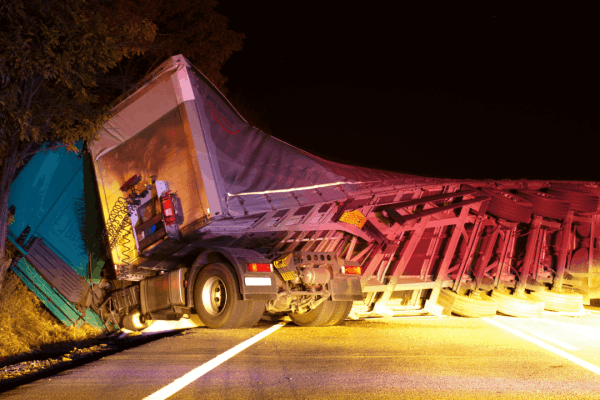
Cargo-related crashes require examination of loading procedures, weight distribution, and securement compliance with federal safety regulations. Liability may involve shippers, loaders, carriers, or drivers depending on duties and inspection obligations. Documentation and equipment reviews help determine responsibility for violations.
5. How is liability determined in a truck accident when mechanical failure is suspected?
Mechanical failure claims involve reviewing maintenance records, inspection reports, repair histories, and testing components. Experts determine whether breakdowns resulted from poor maintenance, negligent repairs, or manufacturing defects. Liability may extend to carriers, contractors, or manufacturers based on evidence.
Key Takeaways
- Systematic Investigation Process: Liability determination in commercial vehicle crashes follows structured phases from immediate scene investigation through regulatory review, technical analysis, corporate examination, and comparative evaluation, with each phase potentially revealing different liability aspects.
- Federal Regulations Provide Standards: FMCSA compliance requirements create objective benchmarks for evaluating commercial trucking operations, with violations potentially establishing negligence per se that may simplify liability determination.
- Expert Analysis Essential: Complex commercial vehicle accidents may require specialized expertise in accident reconstruction, federal regulations, industry standards, and human factors to properly evaluate crash causation.
- Evidence Preservation Important: Prompt documentation, medical treatment, preservation demands, and independent investigation may be important for liability determination, particularly because trucking companies sometimes destroy evidence.
- Multiple Liability Pathways: Liability in semi-truck accidents can arise through direct driver negligence, employer vicarious liability, corporate negligence in hiring or training, maintenance failures, or regulatory violations.